Important Details
IJCRT - International Peer Reviewed, Open Access Journal, Multidisciplinary, Monthly, Nominal(Low) Fees for Professional Research Services International Journal of Creative Research Thoughts - IJCRT Peer Review Journal, Refereed Journal, Peer Reviewed Journal , Referred Journal and Indexed Journal, Open access, Online and Print Journal,international Journal Open Access, Accepted by Indian and foreign university ,IJCRT Followed Norms, guidelines, requirement, listing criteria and methodology of score/point also applied from: Scopus , Web of Science , UGC Approved , UGC CARE, UGC-CARE .
UGC Approved Journal No: 49023 (18)
UGC approval Link
https://ijcrt.org/ugc%20approval.jpg
All Policy and Approval
Please Like Our Facebook Page | CrossRef DOI and Hard copy of Certificate Provide if required. | www.IJCRT.org | editor@IJCRT.org | IJCRT WhatsApp +91 94294 58311
Publication Details:
- Paper Submission : 31-Oct-2026. Call For Paper (Volume 14 | Issue 9 | Month- September 2026)
- Acceptance/Rejection Notification: Within 02-04 Days.
- Paper Publish: Within 02-04 Days after submitting all documents.
-
Submit Your Paper Any time There No deadline.
-
Publication fees : 1570 INR for Indian author & 59$ for foreign International author.
Please Like Our Facebook Page | CrossRef DOI and Hard copy of Certificate Provide if required.
Licence and Indexing
Indexing In Google Scholar, SSRN, ResearcherID-Publons, Semantic Scholar | AI-Powered Research Tool, Microsoft Academic, Academia.edu, arXiv.org, Research Gate, CiteSeerX, ResearcherID Thomson Reuters, Mendeley : reference manager, DocStoc, ISSUU, Scribd, and many more | High Impact Factor: 7.97 | Digital object identifier (DOI) and Hard Copy of certificate Provided.




























Licence
DOI
ISSN Approved impact factor: 7.97 
Creative Common 
Valid as per new UGC Gazette regulations 

INTERNATIONAL JOURNAL OF CREATIVE RESEARCH THOUGHTS - IJCRT (IJCRT.ORG)
International Peer Reviewed & Refereed Journals, Open Access Journal
IJCRT Peer-Reviewed (Refereed) Journal as Per New UGC Rules.
ISSN Approved Journal No: 2320-2882 | Impact factor: 7.97 | ESTD Year: 2013
Call For Paper - Volume 14 | Issue 9 | Month- September 2026
Scholarly open access journals, Peer-reviewed, and Refereed Journals, Impact factor 7.97 (Calculate by google scholar and Semantic Scholar | AI-Powered Research Tool) , Multidisciplinary, Monthly, Indexing in all major database & Metadata, Citation Generator, Digital Object Identifier(CrossRef DOI)
IJCRT WhatsApp Contact
IJCRT Search Xplore - Search all paper by Paper Name , Author Name, and Title
Volume 11 | Issue 5 |
Volume 11 | Issue 5 | Month
Downlaod After Publication 1) Table of content index in PDF
2) Table of content index in HTML 2)Table of content index in HTML
3) Front Page 3) Front Page
4) Back Page 4) Back Page
5) Editor Board Member 5)Editor Board Member
6) OLD Style Issue 6)OLD Style Issue
 |
 |
|---|---|
| IJCRT Journal front page | IJCRT Journal Back Page |
Paper Title: Blume: Behavioural Learning And Understanding In Malfeasance Evaluation Crime Identification And Reporting Application
Author Name(s): ANKIT PATHAK, AMAN BHATT, ANURAG PODDER, OSHIN SHARMA
Published Paper ID: - IJCRT2305259
Register Paper ID - 234928
Publisher Journal Name: IJPUBLICATION, IJCRT
DOI Member ID: 10.6084/m9.doi.one.IJCRT2305259 and DOI :
Author Country : Indian Author, India, 201204 , GHAZIABAD, 201204 , | Research Area: Science and Technology Published Paper URL: http://ijcrt.org/viewfull.php?&p_id=IJCRT2305259 Published Paper PDF: download.php?file=IJCRT2305259 Published Paper PDF: http://www.ijcrt.org/papers/IJCRT2305259.pdf
Your Paper Publication Details:
Title: BLUME: BEHAVIOURAL LEARNING AND UNDERSTANDING IN MALFEASANCE EVALUATION CRIME IDENTIFICATION AND REPORTING APPLICATION
DOI (Digital Object Identifier) :
Pubished in Volume: 11 | Issue: 5 | Year: May 2023
Publisher Name : IJCRT | www.ijcrt.org | ISSN : 2320-2882
Subject Area: Science and Technology
Author type: Indian Author
Pubished in Volume: 11
Issue: 5
Pages: c25-c33
Year: May 2023
Downloads: 339
E-ISSN Number: 2320-2882
Abstract
The Crime Identification & Reporting Application is a powerful software tool that enables the detection and reporting of criminal activities. Its advanced algorithms and data analysis techniques identify anomalies (illegal and dangerous weapons) in live feed.The application also provides real-time alerts on identification of the anomalies. Proposed BLUME approach runs on the live feed of the surveillance cameras that are connected to it and then it reads the data in real-time. While doing so it uses a single shot detection technique to identify the anomalies in the live feed and report it back to the user.
Licence: creative commons attribution 4.0
License
Creative Commons Attribution 4.0 and The Open Definition

Keywords
Clustering, Classification, Crime, Data Preprocessing, CNN.
License
Creative Commons Attribution 4.0 and The Open Definition
Paper Title: Robotic Process Automation And Its Applications
Author Name(s): Dr. Badri Narayan Mohapatra, Maitreyee Bhangale, Pratiksha Chaudhari
Published Paper ID: - IJCRT2305258
Register Paper ID - 235764
Publisher Journal Name: IJPUBLICATION, IJCRT
DOI Member ID: 10.6084/m9.doi.one.IJCRT2305258 and DOI :
Author Country : Indian Author, India, 411045 , pune, 411045 , | Research Area: Published Paper URL: http://ijcrt.org/viewfull.php?&p_id=IJCRT2305258 Published Paper PDF: download.php?file=IJCRT2305258 Published Paper PDF: http://www.ijcrt.org/papers/IJCRT2305258.pdf
Your Paper Publication Details:
Title: ROBOTIC PROCESS AUTOMATION AND ITS APPLICATIONS
DOI (Digital Object Identifier) :
Pubished in Volume: 11 | Issue: 5 | Year: May 2023
Publisher Name : IJCRT | www.ijcrt.org | ISSN : 2320-2882
Subject Area:
Author type: Indian Author
Pubished in Volume: 11
Issue: 5
Pages: c20-c24
Year: May 2023
Downloads: 395
E-ISSN Number: 2320-2882
Abstract
Through the application of Robotic Process Automation (RPA) organizations aim to increase their operational efficiency. In RPA, robots, or 'bots' for short, represent software agents capable of interacting with software systems by mimicking user actions, thus alleviating the workload of the human workforce. RPA has already seen significant uptake in practice; solution technologies are offered by multiple vendors. Contrasting with this early practical adoption is the hitherto relative lack of attention to RPA in the academic literature. Consequently, RPA lacks the sound theoretical foundations that allow for objective reasoning around its application and development. This, in turn, hinders initiatives for achieving meaningful advances in the field. This paper presents a structured literature review that identifies a few contemporary, RPA related themes and challenges for future research.
Licence: creative commons attribution 4.0
License
Creative Commons Attribution 4.0 and The Open Definition
Keywords
Robotic Process Automation, Bot technology, software Bot, tools.
License
Creative Commons Attribution 4.0 and The Open Definition
Paper Title: Consumer Preference Towards Home Automation System
Author Name(s): SANJEEV.S.N, M.GUNASEKARAN
Published Paper ID: - IJCRT2305257
Register Paper ID - 235775
Publisher Journal Name: IJPUBLICATION, IJCRT
DOI Member ID: 10.6084/m9.doi.one.IJCRT2305257 and DOI :
Author Country : Indian Author, India, 641659 , COIMBATORE, 641659 , | Research Area: Commerce All Published Paper URL: http://ijcrt.org/viewfull.php?&p_id=IJCRT2305257 Published Paper PDF: download.php?file=IJCRT2305257 Published Paper PDF: http://www.ijcrt.org/papers/IJCRT2305257.pdf
Your Paper Publication Details:
Title: CONSUMER PREFERENCE TOWARDS HOME AUTOMATION SYSTEM
DOI (Digital Object Identifier) :
Pubished in Volume: 11 | Issue: 5 | Year: May 2023
Publisher Name : IJCRT | www.ijcrt.org | ISSN : 2320-2882
Subject Area: Commerce All
Author type: Indian Author
Pubished in Volume: 11
Issue: 5
Pages: c11-c19
Year: May 2023
Downloads: 414
E-ISSN Number: 2320-2882
Abstract
The study aims to investigate the consumer preferences towards home automation systems in a comparative manner. The study addresses the challenges of understanding the complex and dynamic nature of consumer preferences by utilizing both qualitative and quantitative data analysis techniques. The study also examines the role of demographic factors such as age, income, and education in shaping consumer preferences. The results reveal that consumers prioritize ease of use, energy efficiency, security, and compatibility with other devices in their preferences towards home automation systems. The study also finds significant differences in consumer preferences across different geographical regions, with some regions placing greater emphasis on environmental sustainability, while others prioritize cost-effectiveness. The study provides insights into the factors that drive consumer preferences towards home automation systems and can assist marketers and product developers in the industry in tailoring their products to meet the diverse needs of consumers.
Licence: creative commons attribution 4.0
License
Creative Commons Attribution 4.0 and The Open Definition
Keywords
Home automation, consumer preference, demographic factors
License
Creative Commons Attribution 4.0 and The Open Definition
Paper Title: A Review on Nanoemul gel
Author Name(s): Deepali Narendra Lodha, Aditi Kardile, Vaishnavi Raut, Maya Mahadik, Snehal Lad
Published Paper ID: - IJCRT2305256
Register Paper ID - 235962
Publisher Journal Name: IJPUBLICATION, IJCRT
DOI Member ID: 10.6084/m9.doi.one.IJCRT2305256 and DOI :
Author Country : Indian Author, India, 414202 , Kada, 414202 , | Research Area: Pharmacy All Published Paper URL: http://ijcrt.org/viewfull.php?&p_id=IJCRT2305256 Published Paper PDF: download.php?file=IJCRT2305256 Published Paper PDF: http://www.ijcrt.org/papers/IJCRT2305256.pdf
Your Paper Publication Details:
Title: A REVIEW ON NANOEMUL GEL
DOI (Digital Object Identifier) :
Pubished in Volume: 11 | Issue: 5 | Year: May 2023
Publisher Name : IJCRT | www.ijcrt.org | ISSN : 2320-2882
Subject Area: Pharmacy All
Author type: Indian Author
Pubished in Volume: 11
Issue: 5
Pages: c1-c10
Year: May 2023
Downloads: 488
E-ISSN Number: 2320-2882
Abstract
A Nanoemul gel is a topical gel that contains a nanoemulsion dispersed within a gel matrix. The nanoemulsion is typically prepared using high shear mixing techniques and contains droplets of an oil[8] phase dispersed in an aqueous phase stabilized by surfactants or stabilizers. The resulting Nanoemul gel has several advantages over traditional emulsion-based gels, including improved stability, enhanced drug penetration, and increased bioavailability. Nanoemul gels have been studied for their potential in dermatology and drug delivery applications, showing promising results in reducing acne lesions and improving skin appearance, as well as enhancing drug delivery and reducing inflammation. Further research is needed to optimize the formulation and assess the safety and effectiveness of Nanoemul gels for different applications. Nanoemulgel consist two different systems in which drug containing nanoemulsion[9] is incorporated into a gel base. The fusion of these two systems makes this formulation advantageous in several ways. Lipophilic drugs can be easily incorporated and the skin permeability of the incorporated drugs can be enhanced in several folds due to the finely distributed oil droplets in gel phase. Simultaneously, it can be targeted more specifically to the site of action and can avoid first pass metabolism and relieve the user from gastric/systemic incompatibilities. The nanoemulgel drug [13]delivery system is a formulation related intervention to improve drug absorption and therapeutic profile of lipophilic drugs. An increasing trend in nanoemulgel use in recent years has been noticed because of the better acceptability of the preparation to the patients due to their non-greasy, convenience spreadability, and easy applicability and good therapeutic and safety profile. Despite having few limitations, nanoemulgel formulation can be considered as potential and promising candidates for topical[32] delivery of lipophilic drugs in the future.
Licence: creative commons attribution 4.0
License
Creative Commons Attribution 4.0 and The Open Definition
Keywords
Nanoemulgel; Topical Formulation; Drug Delivery through skin[28].
License
Creative Commons Attribution 4.0 and The Open Definition
Paper Title: Bhartiya sahityame darshan ev jan manas per prabhav
Author Name(s): Dr. Mrs. Neelima Dubey
Published Paper ID: - IJCRT2305255
Register Paper ID - 236006
Publisher Journal Name: IJPUBLICATION, IJCRT
DOI Member ID: 10.6084/m9.doi.one.IJCRT2305255 and DOI :
Author Country : Indian Author, India, - , -, - , | Research Area: Science and Technology Published Paper URL: http://ijcrt.org/viewfull.php?&p_id=IJCRT2305255 Published Paper PDF: download.php?file=IJCRT2305255 Published Paper PDF: http://www.ijcrt.org/papers/IJCRT2305255.pdf
Your Paper Publication Details:
Title: BHARTIYA SAHITYAME DARSHAN EV JAN MANAS PER PRABHAV
DOI (Digital Object Identifier) :
Pubished in Volume: 11 | Issue: 5 | Year: May 2023
Publisher Name : IJCRT | www.ijcrt.org | ISSN : 2320-2882
Subject Area: Science and Technology
Author type: Indian Author
Pubished in Volume: 11
Issue: 5
Pages: b988-b990
Year: May 2023
Downloads: 444
E-ISSN Number: 2320-2882
Abstract
Bhartiya sahityame darshan ev jan manas per prabhav
Licence: creative commons attribution 4.0
License
Creative Commons Attribution 4.0 and The Open Definition
Keywords
Bhartiya sahityame darshan ev jan manas per prabhav
License
Creative Commons Attribution 4.0 and The Open Definition
Paper Title: Internet Of Things Based Smart Agriculture Towards Making Field Talk
Author Name(s): Chandana N, Sameeksha S, Bhavana G M, Sahana J P, Ms. K S Smitha
Published Paper ID: - IJCRT2305254
Register Paper ID - 236026
Publisher Journal Name: IJPUBLICATION, IJCRT
DOI Member ID: 10.6084/m9.doi.one.IJCRT2305254 and DOI :
Author Country : Indian Author, India, 560091 , Bangalore, 560091 , | Research Area: Science and Technology Published Paper URL: http://ijcrt.org/viewfull.php?&p_id=IJCRT2305254 Published Paper PDF: download.php?file=IJCRT2305254 Published Paper PDF: http://www.ijcrt.org/papers/IJCRT2305254.pdf
Your Paper Publication Details:
Title: INTERNET OF THINGS BASED SMART AGRICULTURE TOWARDS MAKING FIELD TALK
DOI (Digital Object Identifier) :
Pubished in Volume: 11 | Issue: 5 | Year: May 2023
Publisher Name : IJCRT | www.ijcrt.org | ISSN : 2320-2882
Subject Area: Science and Technology
Author type: Indian Author
Pubished in Volume: 11
Issue: 5
Pages: b983-b987
Year: May 2023
Downloads: 333
E-ISSN Number: 2320-2882
Abstract
Internet-of-Things (IoT)-based technologies have quickly transformed practically every business, including "Smart Agriculture," which has switched from statistical to quantitative methods. Such radical developments are upending traditional agricultural practises and opening up new opportunities alongside a number of difficulties. This research demonstrates the promise of wireless sensors and the Internet of Things (IoT) in agriculture as well as the difficulties that will inevitably arise when integrating this technology with conventional farming methods. In-depth analysis is done on IoT devices and communication methods related to wireless sensors used in agriculture applications. The available sensors for various agricultural applications, including soil moisture, humidity, and plant development, are listed. We explain how this technology benefits farmers at all stages of crop production, from sowing to harvesting.
Licence: creative commons attribution 4.0
License
Creative Commons Attribution 4.0 and The Open Definition
Keywords
Smart agriculture, IOT(Internet of Things, Sensors
License
Creative Commons Attribution 4.0 and The Open Definition
Paper Title: RECENT ADVANCES IN TRANSDERMAL DRUG DELIVERY SYSTEM (TDDS)
Author Name(s): Dipali A. Chavan, Pravin B. Suruse, Lokesh G. Barde
Published Paper ID: - IJCRT2305253
Register Paper ID - 236076
Publisher Journal Name: IJPUBLICATION, IJCRT
DOI Member ID: 10.6084/m9.doi.one.IJCRT2305253 and DOI :
Author Country : Indian Author, India, - , -, - , | Research Area: Science and Technology Published Paper URL: http://ijcrt.org/viewfull.php?&p_id=IJCRT2305253 Published Paper PDF: download.php?file=IJCRT2305253 Published Paper PDF: http://www.ijcrt.org/papers/IJCRT2305253.pdf
Your Paper Publication Details:
Title: RECENT ADVANCES IN TRANSDERMAL DRUG DELIVERY SYSTEM (TDDS)
DOI (Digital Object Identifier) :
Pubished in Volume: 11 | Issue: 5 | Year: May 2023
Publisher Name : IJCRT | www.ijcrt.org | ISSN : 2320-2882
Subject Area: Science and Technology
Author type: Indian Author
Pubished in Volume: 11
Issue: 5
Pages: b967-b982
Year: May 2023
Downloads: 516
E-ISSN Number: 2320-2882
Abstract
Transdermal drug delivery system (TDDDS), commonly referred to as "patches", are medication dosage forms intended to disperse a therapeutically adequate dose of medication across the skin of patient. It is necessary to consider the complete morphological, biophysical, and physicochemical characteristics of the skin in order to transfer medical substance through the skin of humans for systemic effects. By improving patient compliance and avoiding first pass metabolism, respectively, transdermal administration offers a competitive advantage over injectables and oral methods. Transdermal delivery not only allows for continuous infusion of medication with brief biological half-lives but also avoids pulsed entrance into the systemic circulation, which frequently results in unfavourable side effects. The TDDS review papers offer insightful data on the assessment of transdermal drug delivery system. A transdermal drug delivery system stands out among the new non-invasive administration methods that have recently emerged as alternatives to traditional needle injection because of its low rate of patient rejection, exceptional ease of administration, and exceptional patient convenience and adherence. The skin care sector, including cosmetics, as well as the pharmaceutical industry may be able to use TDDS. This strategy can prevent local drug concentration builds up and non-specific drug delivery to tissue that are not the drugs target tissues because it primarily involves local administration. Nevertheless, despite countless studies being done to find a way around this bottleneck, the physicochemical characteristics of the skin translate to several challenges and limitations in transdermal distribution.
Licence: creative commons attribution 4.0
License
Creative Commons Attribution 4.0 and The Open Definition
Keywords
Transdermal drug delivery system (TDDS), First-generation TDS, Second-generation TDS, Polymer Matrix, skin, active or passive method, characterization
License
Creative Commons Attribution 4.0 and The Open Definition
Paper Title: Waterlogging measures for vitthalwadi ulhasnagar
Author Name(s): Komal Gujarati, Manzar Rizvi, Shubham halwai, Farhaan qureshi, Manthan patel
Published Paper ID: - IJCRT2305252
Register Paper ID - 236138
Publisher Journal Name: IJPUBLICATION, IJCRT
DOI Member ID: 10.6084/m9.doi.one.IJCRT2305252 and DOI :
Author Country : Indian Author, India, 400607 , Thane, 400607 , | Research Area: Others area Published Paper URL: http://ijcrt.org/viewfull.php?&p_id=IJCRT2305252 Published Paper PDF: download.php?file=IJCRT2305252 Published Paper PDF: http://www.ijcrt.org/papers/IJCRT2305252.pdf
Your Paper Publication Details:
Title: WATERLOGGING MEASURES FOR VITTHALWADI ULHASNAGAR
DOI (Digital Object Identifier) :
Pubished in Volume: 11 | Issue: 5 | Year: May 2023
Publisher Name : IJCRT | www.ijcrt.org | ISSN : 2320-2882
Subject Area: Others area
Author type: Indian Author
Pubished in Volume: 11
Issue: 5
Pages: b940-b966
Year: May 2023
Downloads: 424
E-ISSN Number: 2320-2882
Abstract
Urban runoff increases significantly due to increased impervious area and reduced drainage network. Evaluation of land use in urban area plays a vital role as input to estimation of runoff. The hydrological design standard for water resource planning and management is commonly based on frequency of occurrence of heavy rainfall events. In the area of vithalwadi the life and properties are under the threat of flooding due to heavy rainfall within frequent time interval. In the present study, the occurrence of most frequent heavy rainfall event is investigated for Kathimanavli area, located near the Vithalwadi Railway Station in the State of Maharashtra, India and used for estimation of run off depth . The land use detail for the study area was obtained by integration of GIS and remote sensing. The spatial variation of event rainfall is considered with certain percentage of deviation from base rainfall for each triangle area that contributes to the run-off. The results of the analysis indicate that the study area can produce the run-off volume more than the present condition for water management at an average seasonal rainfall the canal already present, by maintaining the velocity of flow throughout the canal and drain out water into Ulhas river. Keywords: Hydrology, Runoff, Waterlogging.
Licence: creative commons attribution 4.0
License
Creative Commons Attribution 4.0 and The Open Definition
Keywords
Waterlogging methodology QGIS applications rational method flood estimation kerby method Design of canal
License
Creative Commons Attribution 4.0 and The Open Definition
Paper Title: Gujarati Language POS Tagging Using Hidden Markov Model (HMM)
Author Name(s): Dr Dikshan N Shah
Published Paper ID: - IJCRT2305251
Register Paper ID - 236152
Publisher Journal Name: IJPUBLICATION, IJCRT
DOI Member ID: 10.6084/m9.doi.one.IJCRT2305251 and DOI :
Author Country : Indian Author, India, 395001 , Surat, 395001 , | Research Area: Science and Technology Published Paper URL: http://ijcrt.org/viewfull.php?&p_id=IJCRT2305251 Published Paper PDF: download.php?file=IJCRT2305251 Published Paper PDF: http://www.ijcrt.org/papers/IJCRT2305251.pdf
Your Paper Publication Details:
Title: GUJARATI LANGUAGE POS TAGGING USING HIDDEN MARKOV MODEL (HMM)
DOI (Digital Object Identifier) :
Pubished in Volume: 11 | Issue: 5 | Year: May 2023
Publisher Name : IJCRT | www.ijcrt.org | ISSN : 2320-2882
Subject Area: Science and Technology
Author type: Indian Author
Pubished in Volume: 11
Issue: 5
Pages: b933-b939
Year: May 2023
Downloads: 459
E-ISSN Number: 2320-2882
Abstract
Part of Speech (POS) tagging refers to the process of classifying each morpheme, including punctuation marks, in a particular text document according to the context. An important first step in natural language processing is the parts of speech tagging (POS) process (NLP). To tag each word in the corpus with its appropriate parts of speech is its goal. Noun, pronoun, verb, adjective, and adverb are the fundamental POS tags, among others. POS tags are required for speech recognition and analysis, machine translation, lexical analysis such as word sense disambiguation, named entity recognition, information retrieval, and this system also assisted opinion mining by revealing the sentiments of a given text. POS taggers are also lacking in many Indian languages because basic resources like corpora and morphological analyzers are still being researched and developed. The following section of this research proposes a probabilistic Hidden Markov Model-based POS tagger for Gujarati. In order to reduce ambiguity and misclassification rates, the hidden Markov model predicts the hidden sequence based on the highest observation likelihood. A variety of POS tags at the word level make up the model that was tested using sample input text data.
Licence: creative commons attribution 4.0
License
Creative Commons Attribution 4.0 and The Open Definition
Keywords
Indian Languages, POS tagging, Hidden Markov Model, Probabilistic approach
License
Creative Commons Attribution 4.0 and The Open Definition
Paper Title: TRANSETHOSOMES; AN EFFECTIVE TOOL IN BYPASSING BARRIERS FOR TOPICAL ADMINISTRATION OF FORMULATION.
Author Name(s): Pooja Halesh, Dr E Gopinath, K Chethan, Dr N S Ganesh, Dr Vineeth Chandy
Published Paper ID: - IJCRT2305250
Register Paper ID - 236160
Publisher Journal Name: IJPUBLICATION, IJCRT
DOI Member ID: 10.6084/m9.doi.one.IJCRT2305250 and DOI :
Author Country : Indian Author, India, India , Bangalore, India , | Research Area: Pharmacy All Published Paper URL: http://ijcrt.org/viewfull.php?&p_id=IJCRT2305250 Published Paper PDF: download.php?file=IJCRT2305250 Published Paper PDF: http://www.ijcrt.org/papers/IJCRT2305250.pdf
Your Paper Publication Details:
Title: TRANSETHOSOMES; AN EFFECTIVE TOOL IN BYPASSING BARRIERS FOR TOPICAL ADMINISTRATION OF FORMULATION.
DOI (Digital Object Identifier) :
Pubished in Volume: 11 | Issue: 5 | Year: May 2023
Publisher Name : IJCRT | www.ijcrt.org | ISSN : 2320-2882
Subject Area: Pharmacy All
Author type: Indian Author
Pubished in Volume: 11
Issue: 5
Pages: b921-b932
Year: May 2023
Downloads: 439
E-ISSN Number: 2320-2882
Abstract
The complex stratum corneum barrier is the main obstacle to the transdermal administration of medicines. Modern lipid-based nanosystems, in particular transethosomes, have the capacity to penetrate the stratum corneum's dense network. They have demonstrated to be an effective technique for the transportation of medicines. Transethosomes(TELs) are composed of phospholipid, ethanol, water and edge activator(surfactants) or permeation enhancer(oleic acid). Delivering medication molecules into the circulation is made possible by the softness and flexibility that ethanol and edge activator both offer. Various techniques involved in the formulation of transethosomes are Cold method, Hot method, Thin film hydration method and Mechanical dispersion method. Compared to other vesicular systems, transethosomes have small particle sizes and are easily able to change the shape of vesicles, allowing them to pass through the layers of skin. The characterization of vesicles include Size of the particle and surface charge, Trasmission Electron microscopy, determination of entrapment efficiency, surface morphology study, interaction study by DSC and FTIR, drug content and stability of vesicles. These vesicular system can be used for transdermal delivery of various drugs such as NSAIDS, antifungal, antibiotics, antiparkinsonism, antiviral etc., In this review, the applications, challenging problems, and potential future developments of transethosomes were examined along with their nature, methods of preparation, and evaluation parameters.
Licence: creative commons attribution 4.0
License
Creative Commons Attribution 4.0 and The Open Definition
Keywords
Vesicular system, Liposome, Ethosomes, Transferosomes, Transethosomes.
License
Creative Commons Attribution 4.0 and The Open Definition
Call For Paper September 2026
Call For Papers
September 2026
Volume 14 | Issue 9
Last Date :
31-Oct-2026
Submit Manuscript Online Impact Factor: 7.97 Review Results : Within 02-03 Days Paper Publication : Within 02-03 Days
September 2026
Volume 14 | Issue 9
Last Date :
31-Oct-2026
Submit Manuscript Online Impact Factor: 7.97 Review Results : Within 02-03 Days Paper Publication : Within 02-03 Days
Published Issue Details
For Authors
Forms / Downloads
Other IMP Links
Indexing Partner
Research Area
LICENSE





ISSN and 7.97 Impact Factor Details
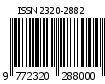
ISSN: 2320-2882 Impact Factor: 7.97 and ISSN APPROVED Journal Starting Year (ESTD) : 2013


ISSN and 7.97 Impact Factor Details
ISSN: 2320-2882 Impact Factor: 7.97 and ISSN APPROVED Journal Starting Year (ESTD) : 2013
DOI Details
CONFERENCE
CONFERENCE MANAGMENT & PUBLICATION CONFERENCE PROPOSAL
RECENT CONFERENCE

CONFERENCE PROPOSAL CONFERENCE PROCEEDINGS
CONFERENCE PROPOSAL CONFERENCE PROCEEDINGS
For Reviewer /Referral (RMS) Earn 500 per paper
Important Links
NEWS & Conference
Digital Library
IJCRT RMS | Earn 500 Per Paper.

Open Access


LICENSE
Indexing Partner
Scholarly open access journals, Peer-reviewed, and Refereed Journals, Impact factor 7.97 (Calculate by google scholar and Semantic Scholar | AI-Powered Research Tool) , Multidisciplinary, Monthly, Indexing in all major database & Metadata, Citation Generator, Digital Object Identifier(DOI)