Important Details
IJCRT - International Peer Reviewed, Open Access Journal, Multidisciplinary, Monthly, Nominal(Low) Fees for Professional Research Services International Journal of Creative Research Thoughts - IJCRT Peer Review Journal, Refereed Journal, Peer Reviewed Journal , Referred Journal and Indexed Journal, Open access, Online and Print Journal,international Journal Open Access, Accepted by Indian and foreign university ,IJCRT Followed Norms, guidelines, requirement, listing criteria and methodology of score/point also applied from: Scopus , Web of Science , UGC Approved , UGC CARE, UGC-CARE .
UGC Approved Journal No: 49023 (18)
UGC approval Link
https://ijcrt.org/ugc%20approval.jpg
All Policy and Approval
Please Like Our Facebook Page | CrossRef DOI and Hard copy of Certificate Provide if required. | www.IJCRT.org | editor@IJCRT.org | IJCRT WhatsApp +91 94294 58311
Publication Details:
- Paper Submission : 30-Sep-2026. Call For Paper (Volume 14 | Issue 9 | Month- September 2026)
- Acceptance/Rejection Notification: Within 02-04 Days.
- Paper Publish: Within 02-04 Days after submitting all documents.
-
Submit Your Paper Any time There No deadline.
-
Publication fees : 1570 INR for Indian author & 59$ for foreign International author.
Please Like Our Facebook Page | CrossRef DOI and Hard copy of Certificate Provide if required.
Licence and Indexing
Indexing In Google Scholar, SSRN, ResearcherID-Publons, Semantic Scholar | AI-Powered Research Tool, Microsoft Academic, Academia.edu, arXiv.org, Research Gate, CiteSeerX, ResearcherID Thomson Reuters, Mendeley : reference manager, DocStoc, ISSUU, Scribd, and many more | High Impact Factor: 7.97 | Digital object identifier (DOI) and Hard Copy of certificate Provided.




























Licence
DOI
ISSN Approved impact factor: 7.97 
Creative Common 
Valid as per new UGC Gazette regulations 

INTERNATIONAL JOURNAL OF CREATIVE RESEARCH THOUGHTS - IJCRT (IJCRT.ORG)
International Peer Reviewed & Refereed Journals, Open Access Journal
IJCRT Peer-Reviewed (Refereed) Journal as Per New UGC Rules.
ISSN Approved Journal No: 2320-2882 | Impact factor: 7.97 | ESTD Year: 2013
Call For Paper - Volume 14 | Issue 9 | Month- September 2026
Scholarly open access journals, Peer-reviewed, and Refereed Journals, Impact factor 7.97 (Calculate by google scholar and Semantic Scholar | AI-Powered Research Tool) , Multidisciplinary, Monthly, Indexing in all major database & Metadata, Citation Generator, Digital Object Identifier(CrossRef DOI)
IJCRT WhatsApp Contact
IJCRT Search Xplore - Search all paper by Paper Name , Author Name, and Title
Volume 13 | Issue 5 |
Volume 13 | Issue 5 | Month
Downlaod After Publication 1) Table of content index in PDF
2) Table of content index in HTML 2)Table of content index in HTML
3) Front Page 3) Front Page
4) Back Page 4) Back Page
5) Editor Board Member 5)Editor Board Member
6) OLD Style Issue 6)OLD Style Issue
 |
 |
|---|---|
| IJCRT Journal front page | IJCRT Journal Back Page |
Paper Title: Emergency Vehicle Detection And Traffic Control Using OpenCV And Camera
Author Name(s): Dr. Anitha Devi M D, Varun A Lohar, Tharun C Gowda, Ragahavendra G, Umashankara
Published Paper ID: - IJCRT2505155
Register Paper ID - 284192
Publisher Journal Name: IJPUBLICATION, IJCRT
DOI Member ID: 10.6084/m9.doi.one.IJCRT2505155 and DOI :
Author Country : Indian Author, India, 572105 , Tumakuru, 572105 , | Research Area: Science and Technology Published Paper URL: http://ijcrt.org/viewfull.php?&p_id=IJCRT2505155 Published Paper PDF: download.php?file=IJCRT2505155 Published Paper PDF: http://www.ijcrt.org/papers/IJCRT2505155.pdf
Your Paper Publication Details:
Title: EMERGENCY VEHICLE DETECTION AND TRAFFIC CONTROL USING OPENCV AND CAMERA
DOI (Digital Object Identifier) :
Pubished in Volume: 13 | Issue: 5 | Year: May 2025
Publisher Name : IJCRT | www.ijcrt.org | ISSN : 2320-2882
Subject Area: Science and Technology
Author type: Indian Author
Pubished in Volume: 13
Issue: 5
Pages: b373-b379
Year: May 2025
Downloads: 256
E-ISSN Number: 2320-2882
Abstract
The growing urbanization and city population expansion have resulted in an immense rise in vehicle congestion, necessitating the need for advanced and responsive traffic control systems. The current research offers an advanced, real-time traffic management system implemented using Raspberry Pi and the YOLOv5 object detection engine. The system takes a real-time video feed as input and detects and classifies various vehicle classes, dynamically adjusting traffic signal timings based on vehicle density in particular lanes. One notable feature of the system is the detection of emergency vehicles--ambulances and fire trucks--and overriding regular signal functioning to give them constant right-of-way. The implementation is highly accurate, with a mean Average Precision (mAP@0.5) of 0.865, detection accuracy of 97% for ambulances, and a detection accuracy of 94% for fire trucks. Additionally, an easy-to-use web interface implemented using Flask allows real-time monitoring and control. This smart system significantly improves urban traffic flow and allows earlier emergency response, and it is a promising scalable part of smart city infrastructure.
Licence: creative commons attribution 4.0
License
Creative Commons Attribution 4.0 and The Open Definition

Keywords
Artificial Intelligence, Computer Vision, Emergency Vehicle Detection, Intelligent Traffic System, Smart City, Traffic Management, YOLOv5
License
Creative Commons Attribution 4.0 and The Open Definition
Paper Title: Integrating Project Based Learning to enhance Speaking Skills in ESL Classroom
Author Name(s): N.Thamarai selvan, Dr.V.V.Malinee, Mr.C.Shabharishwaran
Published Paper ID: - IJCRT2505154
Register Paper ID - 285085
Publisher Journal Name: IJPUBLICATION, IJCRT
DOI Member ID: 10.6084/m9.doi.one.IJCRT2505154 and DOI :
Author Country : Indian Author, India, 637003 , Namakkal, 637003 , | Research Area: Arts All Published Paper URL: http://ijcrt.org/viewfull.php?&p_id=IJCRT2505154 Published Paper PDF: download.php?file=IJCRT2505154 Published Paper PDF: http://www.ijcrt.org/papers/IJCRT2505154.pdf
Your Paper Publication Details:
Title: INTEGRATING PROJECT BASED LEARNING TO ENHANCE SPEAKING SKILLS IN ESL CLASSROOM
DOI (Digital Object Identifier) :
Pubished in Volume: 13 | Issue: 5 | Year: May 2025
Publisher Name : IJCRT | www.ijcrt.org | ISSN : 2320-2882
Subject Area: Arts All
Author type: Indian Author
Pubished in Volume: 13
Issue: 5
Pages: b366-b372
Year: May 2025
Downloads: 226
E-ISSN Number: 2320-2882
Abstract
Project Based Learning (PBL) is a teaching method that encourages students to solve real-world problems. This work focuses on project-based learning and culminates in Indian universities as teachers find ways to make learning meaningful and engaging for boys and girls. Project-based learning begins with a problem or task. Practical and realistic issues or problems that affect students' knowledge and development levels form the -basis of project-based learning teaching. Teachers teach students by asking questions, finding information, and looking at information. Encourages important skills such as teamwork, independent work, self-evaluation, time management, study, or oral and written communication. There are many benefits of using PBL in Indian universities. First, PBL can help students develop 21st-century skills such as problem-solving, critical thinking, and collaboration. These skills are essential to being successful at work and in life. Second, VET can help students learn better by engaging in active learning.
Licence: creative commons attribution 4.0
License
Creative Commons Attribution 4.0 and The Open Definition
Keywords
Instructional approach, group work, autonomous learning, self-assessment skills, time planning, problem-solving, critical thinking, collaboration, etc.
License
Creative Commons Attribution 4.0 and The Open Definition
Paper Title: Sentiment Analysis for Product Review
Author Name(s): Prof. Manoj Shinde, Yash Kadam, Rohit Jaiswal, Sagar Mahajan, Varad Gundale
Published Paper ID: - IJCRT2505153
Register Paper ID - 285110
Publisher Journal Name: IJPUBLICATION, IJCRT
DOI Member ID: 10.6084/m9.doi.one.IJCRT2505153 and DOI :
Author Country : Indian Author, India, 412201 , Pune, 412201 , | Research Area: Science and Technology Published Paper URL: http://ijcrt.org/viewfull.php?&p_id=IJCRT2505153 Published Paper PDF: download.php?file=IJCRT2505153 Published Paper PDF: http://www.ijcrt.org/papers/IJCRT2505153.pdf
Your Paper Publication Details:
Title: SENTIMENT ANALYSIS FOR PRODUCT REVIEW
DOI (Digital Object Identifier) :
Pubished in Volume: 13 | Issue: 5 | Year: May 2025
Publisher Name : IJCRT | www.ijcrt.org | ISSN : 2320-2882
Subject Area: Science and Technology
Author type: Indian Author
Pubished in Volume: 13
Issue: 5
Pages: b362-b365
Year: May 2025
Downloads: 294
E-ISSN Number: 2320-2882
Abstract
Sentiment analysis, also known as opinion mining, is a natural language processing (NLP) technique used to determine the emotional tone behind textual data. This project focuses on implementing sentiment analysis on product reviews to automatically classify customer feedback as positive, negative, or neutral. By leveraging machine learning algorithms and text processing techniques, the system analyzes user-generated content from e-commerce platforms to extract valuable insights into customer satisfaction. The goal is to assist businesses in understanding consumer sentiment at scale, enhancing product development, marketing strategies, and customer experience. Experimental results demonstrate that the model effectively captures sentiment polarity with high accuracy, showcasing its potential as a decision-support tool in online retail.
Licence: creative commons attribution 4.0
License
Creative Commons Attribution 4.0 and The Open Definition
Keywords
SentimentAnalysis, OpinionMining, Product review analysis, Natural language processing(NLP),Customer Feedback analysis.
License
Creative Commons Attribution 4.0 and The Open Definition
Paper Title: Failure of Genuine Democratic Decentralization & Question of Substantive Democracy in India
Author Name(s): Dr. Sumeet Thakur
Published Paper ID: - IJCRT2505151
Register Paper ID - 284933
Publisher Journal Name: IJPUBLICATION, IJCRT
DOI Member ID: 10.6084/m9.doi.one.IJCRT2505151 and DOI :
Author Country : Indian Author, India, - , -, - , | Research Area: Science and Technology Published Paper URL: http://ijcrt.org/viewfull.php?&p_id=IJCRT2505151 Published Paper PDF: download.php?file=IJCRT2505151 Published Paper PDF: http://www.ijcrt.org/papers/IJCRT2505151.pdf
Your Paper Publication Details:
Title: FAILURE OF GENUINE DEMOCRATIC DECENTRALIZATION & QUESTION OF SUBSTANTIVE DEMOCRACY IN INDIA
DOI (Digital Object Identifier) :
Pubished in Volume: 13 | Issue: 5 | Year: May 2025
Publisher Name : IJCRT | www.ijcrt.org | ISSN : 2320-2882
Subject Area: Science and Technology
Author type: Indian Author
Pubished in Volume: 13
Issue: 5
Pages: b349-b358
Year: May 2025
Downloads: 223
E-ISSN Number: 2320-2882
Abstract
Indian democracy is facing the challenge of deepening its democratic form of governance at the local level but presently our civil society, intellectuals and political class do not realize it. The 73rd and 74th constitutional amendments which were initiated with the purpose of empowering the local governance but this democratic revolution has been hijacked by the ruling elites governing the different states with the help of district administrative setup. Panchayats and Municipal governments are not really empowered to legislate and administer upon the subjects devolved to them by the constitutional amendments because the state are not willing to part with their powers and vested interests.
Licence: creative commons attribution 4.0
License
Creative Commons Attribution 4.0 and The Open Definition
Keywords
Failure of Genuine Democratic Decentralization & Question of Substantive Democracy in India
License
Creative Commons Attribution 4.0 and The Open Definition
Paper Title: Creating A Secured Web Server Environment On Arch Linux
Author Name(s): R.Prathap, Sankara Narayanan
Published Paper ID: - IJCRT2505149
Register Paper ID - 284536
Publisher Journal Name: IJPUBLICATION, IJCRT
DOI Member ID: 10.6084/m9.doi.one.IJCRT2505149 and DOI :
Author Country : Indian Author, India, 600107 , Chennai , 600107 , | Research Area: Science and Technology Published Paper URL: http://ijcrt.org/viewfull.php?&p_id=IJCRT2505149 Published Paper PDF: download.php?file=IJCRT2505149 Published Paper PDF: http://www.ijcrt.org/papers/IJCRT2505149.pdf
Your Paper Publication Details:
Title: CREATING A SECURED WEB SERVER ENVIRONMENT ON ARCH LINUX
DOI (Digital Object Identifier) :
Pubished in Volume: 13 | Issue: 5 | Year: May 2025
Publisher Name : IJCRT | www.ijcrt.org | ISSN : 2320-2882
Subject Area: Science and Technology
Author type: Indian Author
Pubished in Volume: 13
Issue: 5
Pages: b340-b344
Year: May 2025
Downloads: 206
E-ISSN Number: 2320-2882
Abstract
Setting up a secured web server environment on Arch Linux is a multifaceted process that entails configuring a lightweight and efficient server with robust security mechanisms. Arch Linux, known for its simplicity and flexibility, provides the ideal platform for deploying tailored web services. This guide details the essential components of creating a secure web server, focusing on software installation, configuration, access controls, and implementing best security practices. The tools involved include OpenSSL for TLS/SSL implementation, UFW or iptables for firewall configuration, and Fail2Ban for intrusion prevention. Existing systems often lack comprehensive security measures, leaving them vulnerable to various cyber threats. The proposed system focuses on creating a highly secure web server environment on Arch Linux by implementing multiple layers of security. This includes the latest encryption protocols, stringent firewall rules, and proactive intrusion prevention techniques, significantly enhancing the server's resilience against attacks.
Licence: creative commons attribution 4.0
License
Creative Commons Attribution 4.0 and The Open Definition
Keywords
Arch Linux, secured web server, Nginx, Apache, SSL/TLS, Let's Encrypt, firewall, UFW, iptables, intrusion detection systems (IDS)
License
Creative Commons Attribution 4.0 and The Open Definition
Paper Title: Neural IDS: Deep Learning For Cybersecurity Threat Detection
Author Name(s): Dr. Raghu Kumar, Vankadari Saketh, Sayash Sikarwar, Rakshith Raj M, Liss Maria S
Published Paper ID: - IJCRT2505148
Register Paper ID - 285154
Publisher Journal Name: IJPUBLICATION, IJCRT
DOI Member ID: 10.6084/m9.doi.one.IJCRT2505148 and DOI : https://doi.org/10.56975/ijcrt.v13i5.285154
Author Country : Indian Author, India, 560077 , Bengaluru, 560077 , | Research Area: Science and Technology Published Paper URL: http://ijcrt.org/viewfull.php?&p_id=IJCRT2505148 Published Paper PDF: download.php?file=IJCRT2505148 Published Paper PDF: http://www.ijcrt.org/papers/IJCRT2505148.pdf
Your Paper Publication Details:
Title: NEURAL IDS: DEEP LEARNING FOR CYBERSECURITY THREAT DETECTION
DOI (Digital Object Identifier) : https://doi.org/10.56975/ijcrt.v13i5.285154
Pubished in Volume: 13 | Issue: 5 | Year: May 2025
Publisher Name : IJCRT | www.ijcrt.org | ISSN : 2320-2882
Subject Area: Science and Technology
Author type: Indian Author
Pubished in Volume: 13
Issue: 5
Pages: b332-b339
Year: May 2025
Downloads: 298
E-ISSN Number: 2320-2882
Abstract
This project proposes a Neural Intrusion Detection System (Neural IDS) that leverages deep learning techniques to detect and classify cybersecurity threats in real time. By applying artificial neural networks to analyze network traffic patterns, the system achieves higher detection rates and reduced false positives compared to traditional signature-based systems. The model is trained on benchmark datasets, learning complex attack signatures and behavioral anomalies. The integration of intelligent threat detection into network security infrastructures ensures proactive defense, adaptability to novel threats, and automated response mechanisms..
Licence: creative commons attribution 4.0
License
Creative Commons Attribution 4.0 and The Open Definition
Keywords
Keywords-- Intrusion Detection System, Cybersecurity, Deep Learning, Neural Networks, Threat Detection, Anomaly Detection
License
Creative Commons Attribution 4.0 and The Open Definition
Paper Title: Bhartiya Siksha Me Swa - Viniyam Adhigam Ka Vikash : Vaidik Kal Se Adhunik Kal Tak
Author Name(s): Ishu singh
Published Paper ID: - IJCRT2505147
Register Paper ID - 285135
Publisher Journal Name: IJPUBLICATION, IJCRT
DOI Member ID: 10.6084/m9.doi.one.IJCRT2505147 and DOI : https://doi.org/10.56975/ijcrt.v13i5.285135
Author Country : Indian Author, India, - , -, - , | Research Area: Arts All Published Paper URL: http://ijcrt.org/viewfull.php?&p_id=IJCRT2505147 Published Paper PDF: download.php?file=IJCRT2505147 Published Paper PDF: http://www.ijcrt.org/papers/IJCRT2505147.pdf
Your Paper Publication Details:
Title: BHARTIYA SIKSHA ME SWA - VINIYAM ADHIGAM KA VIKASH : VAIDIK KAL SE ADHUNIK KAL TAK
DOI (Digital Object Identifier) : https://doi.org/10.56975/ijcrt.v13i5.285135
Pubished in Volume: 13 | Issue: 5 | Year: May 2025
Publisher Name : IJCRT | www.ijcrt.org | ISSN : 2320-2882
Subject Area: Arts All
Author type: Indian Author
Pubished in Volume: 13
Issue: 5
Pages: b325-b331
Year: May 2025
Downloads: 357
E-ISSN Number: 2320-2882
Abstract
Bhartiya Siksha Me Swa - Viniyam Adhigam Ka Vikash : Vaidik Kal Se Adhunik Kal Tak
Licence: creative commons attribution 4.0
License
Creative Commons Attribution 4.0 and The Open Definition
Keywords
Bhartiya Siksha Me Swa - Viniyam Adhigam Ka Vikash : Vaidik Kal Se Adhunik Kal Tak
License
Creative Commons Attribution 4.0 and The Open Definition
Paper Title: Analysing the link among social intelligence and job performance among college instructors in Kerala
Author Name(s): Alagra Antony, Dr.V. Bastin Jerome
Published Paper ID: - IJCRT2505146
Register Paper ID - 284622
Publisher Journal Name: IJPUBLICATION, IJCRT
DOI Member ID: 10.6084/m9.doi.one.IJCRT2505146 and DOI :
Author Country : Indian Author, India, 620002 , Tiruchirappalli, 620002 , | Research Area: Commerce All Published Paper URL: http://ijcrt.org/viewfull.php?&p_id=IJCRT2505146 Published Paper PDF: download.php?file=IJCRT2505146 Published Paper PDF: http://www.ijcrt.org/papers/IJCRT2505146.pdf
Your Paper Publication Details:
Title: ANALYSING THE LINK AMONG SOCIAL INTELLIGENCE AND JOB PERFORMANCE AMONG COLLEGE INSTRUCTORS IN KERALA
DOI (Digital Object Identifier) :
Pubished in Volume: 13 | Issue: 5 | Year: May 2025
Publisher Name : IJCRT | www.ijcrt.org | ISSN : 2320-2882
Subject Area: Commerce All
Author type: Indian Author
Pubished in Volume: 13
Issue: 5
Pages: b316-b324
Year: May 2025
Downloads: 246
E-ISSN Number: 2320-2882
Abstract
This comprehensive study within Kerala's educational framework investigates the complex interplay between social intelligence, academic effectiveness, and student performance among college professors. The research employed mixed methodologies to illustrate a significant and positive relationship between social intelligence and teaching effectiveness. It enhances the influence of student satisfaction on teaching efficacy and the well-being of educators. The association's sagacity is evidently manifest. Educators with advanced social intelligence excel in creating inclusive and engaging learning environments, significantly influencing student behaviour and promoting a harmonious classroom atmosphere. These findings highlight the crucial importance of social intelligence in formulating effective teaching methodologies and enhancing the overall educational experience in culturally diverse institutions in Kerala. Consequently, this study holds substantial importance for educator training and professional development. It aims to equip educators with the interpersonal and emotional intelligence necessary to enhance students' lives and promote their success in varied educational settings.
Licence: creative commons attribution 4.0
License
Creative Commons Attribution 4.0 and The Open Definition
Keywords
Social Intelligence, Job Performance Student Behaviour, Student Satisfaction.
License
Creative Commons Attribution 4.0 and The Open Definition
Paper Title: Automated Content Platform By Multi-Agent Architecture
Author Name(s): Harsh Prakash, Gurditt Singh Dadiala, Abha Aggarwal
Published Paper ID: - IJCRT2505145
Register Paper ID - 285029
Publisher Journal Name: IJPUBLICATION, IJCRT
DOI Member ID: 10.6084/m9.doi.one.IJCRT2505145 and DOI :
Author Country : Indian Author, India, 411041 , Pune, 411041 , | Research Area: Science and Technology Published Paper URL: http://ijcrt.org/viewfull.php?&p_id=IJCRT2505145 Published Paper PDF: download.php?file=IJCRT2505145 Published Paper PDF: http://www.ijcrt.org/papers/IJCRT2505145.pdf
Your Paper Publication Details:
Title: AUTOMATED CONTENT PLATFORM BY MULTI-AGENT ARCHITECTURE
DOI (Digital Object Identifier) :
Pubished in Volume: 13 | Issue: 5 | Year: May 2025
Publisher Name : IJCRT | www.ijcrt.org | ISSN : 2320-2882
Subject Area: Science and Technology
Author type: Indian Author
Pubished in Volume: 13
Issue: 5
Pages: b296-b315
Year: May 2025
Downloads: 240
E-ISSN Number: 2320-2882
Abstract
In this paper, we describe the design of an Automated Content Platform which employs multi-agents systems for content collection, processing, and distribution. The described work merges domain knowledge of Large Language Models (LLMs) with practical deployment approaches that are bounded by scalability, modularity, and efficiency. Our approach followed a stepwise procedure starting with a web-scraping-based content acquisition, then proceeding to content summarization with several models including Gemini by Google, followed by distribution through Telegram and email. The components of the architecture are organized into streams, where each is an independent agent of the system, utilizing FastAPI and Streamlit interfaces, MongoDB for data storage, and so forth. Results prove that the platform substaially meets the requirements for efficient content acquisition from multiple sources, automated summarization of a wide range of topics, and prompt distribution through numerous channels. User testing with 25 participants indicated 87% satisfaction with the quality of summaries provided and 92% with usability of the platform. The measured response times were 3.2 seconds to retrieve content and 4.5 seconds to provide a summary of the retrieved content. The work provided in this document adds to the existing body of knowledge by showing that automated content processes can be further enhanced by multi-agent frameworks focusing on system agility and flexibility in operations.
Licence: creative commons attribution 4.0
License
Creative Commons Attribution 4.0 and The Open Definition
Keywords
Content Automation, Multi-Agent Systems, Natural Language Processing, Web Scraping, Content Distribution, Large Language Models, Retrieval-Augmented Generation
License
Creative Commons Attribution 4.0 and The Open Definition
Paper Title: A Meta Med: Few-Shot Classification of Ultrasound Breast Cancer Images Using Meta-Learning Algorithm
Author Name(s): Sabiha Khatoon, Dr. Mohd Akbar, Dr.Mohammad Suaib
Published Paper ID: - IJCRT2505144
Register Paper ID - 285066
Publisher Journal Name: IJPUBLICATION, IJCRT
DOI Member ID: 10.6084/m9.doi.one.IJCRT2505144 and DOI :
Author Country : Indian Author, India, 226028 , lucknow, 226028 , | Research Area: Science and Technology Published Paper URL: http://ijcrt.org/viewfull.php?&p_id=IJCRT2505144 Published Paper PDF: download.php?file=IJCRT2505144 Published Paper PDF: http://www.ijcrt.org/papers/IJCRT2505144.pdf
Your Paper Publication Details:
Title: A META MED: FEW-SHOT CLASSIFICATION OF ULTRASOUND BREAST CANCER IMAGES USING META-LEARNING ALGORITHM
DOI (Digital Object Identifier) :
Pubished in Volume: 13 | Issue: 5 | Year: May 2025
Publisher Name : IJCRT | www.ijcrt.org | ISSN : 2320-2882
Subject Area: Science and Technology
Author type: Indian Author
Pubished in Volume: 13
Issue: 5
Pages: b276-b295
Year: May 2025
Downloads: 209
E-ISSN Number: 2320-2882
Abstract
Medical datasets often have a skewed class distribution and a lack of high-quality annotated images. However, deep learning methods require a large amount of labelled data for classification. In this study, we present a few-shot learning approach for the classification of ultrasound breast cancer images using meta-learning methods. We used prototypical networks and model-agnostic meta-learning (MAML) algorithms as meta-learning methods. The breast ultrasound images (BUSI) dataset, which has three classes and is difficult to use in meta-learning, was used for meta-testing in a cross-domain approach along with other datasets for meta-training. Our proposed approach yielded an accuracy range of 0.882-0.889, achieved by implementing the ResNet50 backbone with ProtoNet in a 10-shot setting. These results represent a significant improvement ranging from 6.27 to 7.10% over the baseline accuracy of 0.831. The results showed that ProtoNet outperformed the MAML method for all k-shot settings. In addition, the use of ResNet models as the backbone network for feature extraction was found to be more successful than the use of a four-layer convolutional model. Our proposed method is the first attempt to apply meta-learning for few-shot classification in the BUSI dataset while providing higher accuracy compared to deep learning methods for medical images with small-scale datasets and few classes. The methodology used in this study can be adapted to other datasets with similar problems.
Licence: creative commons attribution 4.0
License
Creative Commons Attribution 4.0 and The Open Definition
Keywords
Few-shot classification, meta learning, MAML, breast cancer.
License
Creative Commons Attribution 4.0 and The Open Definition
Call For Paper September 2026
Call For Papers
September 2026
Volume 14 | Issue 9
Last Date :
30-Sep-2026
Submit Manuscript Online Impact Factor: 7.97 Review Results : Within 02-03 Days Paper Publication : Within 02-03 Days
September 2026
Volume 14 | Issue 9
Last Date :
30-Sep-2026
Submit Manuscript Online Impact Factor: 7.97 Review Results : Within 02-03 Days Paper Publication : Within 02-03 Days
Published Issue Details
For Authors
Forms / Downloads
Other IMP Links
Indexing Partner
Research Area
LICENSE





ISSN and 7.97 Impact Factor Details
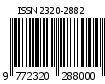
ISSN: 2320-2882 Impact Factor: 7.97 and ISSN APPROVED Journal Starting Year (ESTD) : 2013


ISSN and 7.97 Impact Factor Details
ISSN: 2320-2882 Impact Factor: 7.97 and ISSN APPROVED Journal Starting Year (ESTD) : 2013
DOI Details
CONFERENCE
CONFERENCE MANAGMENT & PUBLICATION CONFERENCE PROPOSAL
RECENT CONFERENCE

CONFERENCE PROPOSAL CONFERENCE PROCEEDINGS
CONFERENCE PROPOSAL CONFERENCE PROCEEDINGS
For Reviewer /Referral (RMS) Earn 500 per paper
Important Links
NEWS & Conference
Digital Library
IJCRT RMS | Earn 500 Per Paper.

Open Access


LICENSE
Indexing Partner
Scholarly open access journals, Peer-reviewed, and Refereed Journals, Impact factor 7.97 (Calculate by google scholar and Semantic Scholar | AI-Powered Research Tool) , Multidisciplinary, Monthly, Indexing in all major database & Metadata, Citation Generator, Digital Object Identifier(DOI)