Important Details
IJCRT - International Peer Reviewed, Open Access Journal, Multidisciplinary, Monthly, Nominal(Low) Fees for Professional Research Services International Journal of Creative Research Thoughts - IJCRT Peer Review Journal, Refereed Journal, Peer Reviewed Journal , Referred Journal and Indexed Journal, Open access, Online and Print Journal,international Journal Open Access, Accepted by Indian and foreign university ,IJCRT Followed Norms, guidelines, requirement, listing criteria and methodology of score/point also applied from: Scopus , Web of Science , UGC Approved , UGC CARE, UGC-CARE .
UGC Approved Journal No: 49023 (18)
UGC approval Link
https://ijcrt.org/ugc%20approval.jpg
All Policy and Approval
Please Like Our Facebook Page | CrossRef DOI and Hard copy of Certificate Provide if required. | www.IJCRT.org | editor@IJCRT.org | IJCRT WhatsApp +91 94294 58311
Publication Details:
- Paper Submission : 31-Oct-2026. Call For Paper (Volume 14 | Issue 9 | Month- September 2026)
- Acceptance/Rejection Notification: Within 02-04 Days.
- Paper Publish: Within 02-04 Days after submitting all documents.
-
Submit Your Paper Any time There No deadline.
-
Publication fees : 1570 INR for Indian author & 59$ for foreign International author.
Please Like Our Facebook Page | CrossRef DOI and Hard copy of Certificate Provide if required.
Licence and Indexing
Indexing In Google Scholar, SSRN, ResearcherID-Publons, Semantic Scholar | AI-Powered Research Tool, Microsoft Academic, Academia.edu, arXiv.org, Research Gate, CiteSeerX, ResearcherID Thomson Reuters, Mendeley : reference manager, DocStoc, ISSUU, Scribd, and many more | High Impact Factor: 7.97 | Digital object identifier (DOI) and Hard Copy of certificate Provided.




























Licence
DOI
ISSN Approved impact factor: 7.97 
Creative Common 
Valid as per new UGC Gazette regulations 

INTERNATIONAL JOURNAL OF CREATIVE RESEARCH THOUGHTS - IJCRT (IJCRT.ORG)
International Peer Reviewed & Refereed Journals, Open Access Journal
IJCRT Peer-Reviewed (Refereed) Journal as Per New UGC Rules.
ISSN Approved Journal No: 2320-2882 | Impact factor: 7.97 | ESTD Year: 2013
Call For Paper - Volume 14 | Issue 9 | Month- September 2026
Scholarly open access journals, Peer-reviewed, and Refereed Journals, Impact factor 7.97 (Calculate by google scholar and Semantic Scholar | AI-Powered Research Tool) , Multidisciplinary, Monthly, Indexing in all major database & Metadata, Citation Generator, Digital Object Identifier(CrossRef DOI)
IJCRT WhatsApp Contact
IJCRT Search Xplore - Search all paper by Paper Name , Author Name, and Title
Volume 13 | Issue 6 |
Volume 13 | Issue 6 | Month
Downlaod After Publication 1) Table of content index in PDF
2) Table of content index in HTML 2)Table of content index in HTML
3) Front Page 3) Front Page
4) Back Page 4) Back Page
5) Editor Board Member 5)Editor Board Member
6) OLD Style Issue 6)OLD Style Issue
 |
 |
|---|---|
| IJCRT Journal front page | IJCRT Journal Back Page |
Paper Title: "ULTRA-WIDEBAND APPLICATIONS FOR 5G TECHNOLOGY"
Author Name(s): Manjunatha S
Published Paper ID: - IJCRT2506248
Register Paper ID - 288610
Publisher Journal Name: IJPUBLICATION, IJCRT
DOI Member ID: 10.6084/m9.doi.one.IJCRT2506248 and DOI : https://doi.org/10.56975/ijcrt.v13i6.288610
Author Country : Indian Author, India, 560036 , Bangalore, 560036 , | Research Area: Science and Technology Published Paper URL: http://ijcrt.org/viewfull.php?&p_id=IJCRT2506248 Published Paper PDF: download.php?file=IJCRT2506248 Published Paper PDF: http://www.ijcrt.org/papers/IJCRT2506248.pdf
Your Paper Publication Details:
Title: "ULTRA-WIDEBAND APPLICATIONS FOR 5G TECHNOLOGY"
DOI (Digital Object Identifier) : https://doi.org/10.56975/ijcrt.v13i6.288610
Pubished in Volume: 13 | Issue: 6 | Year: June 2025
Publisher Name : IJCRT | www.ijcrt.org | ISSN : 2320-2882
Subject Area: Science and Technology
Author type: Indian Author
Pubished in Volume: 13
Issue: 6
Pages: c130-c133
Year: June 2025
Downloads: 273
E-ISSN Number: 2320-2882
Abstract
Technology for communication has improved recently for 5G and ultra-wideband applications; a circular slot pentagonal patch antenna array is created. To enhance the antenna's effectiveness, a pentagonal patch antenna is created within a circular slot. A bandwidth and return loss both help to lower an antenna's size. It is designed to work in the 3.1 GHz-10.6 GHz ultra-wideband frequency range as well as the 1 GHz-6 GHz 5G communication frequency range. For this reason, the traditional pentagonal patch antenna with various slots has good return loss. An antenna with a pentagonal shape is proposed in the work to be done in order to increase efficiency, provide good radiation performance, and reduce manufacturing costs and size. HFSS software was used to design the suggested aerial. We've looked at the antenna's properties, including return loss, gain, and radiation pattern.
Licence: creative commons attribution 4.0
License
Creative Commons Attribution 4.0 and The Open Definition

Keywords
PENTAGONAL PATCH ANTENNA, CIRCULAR SLOT, 5G , UWB BAND, BANDWIDTH, GAIN.
License
Creative Commons Attribution 4.0 and The Open Definition
Paper Title: Transition Landscapes: Spatio-Temporal Analysis of Vegetable Agriculture in Himachal Pradesh Over Three Decades
Author Name(s): Dr. Shivjeet Kaur, Kamalpreet Singh
Published Paper ID: - IJCRT2506247
Register Paper ID - 288612
Publisher Journal Name: IJPUBLICATION, IJCRT
DOI Member ID: 10.6084/m9.doi.one.IJCRT2506247 and DOI :
Author Country : Indian Author, India, - , -, - , | Research Area: Science and Technology Published Paper URL: http://ijcrt.org/viewfull.php?&p_id=IJCRT2506247 Published Paper PDF: download.php?file=IJCRT2506247 Published Paper PDF: http://www.ijcrt.org/papers/IJCRT2506247.pdf
Your Paper Publication Details:
Title: TRANSITION LANDSCAPES: SPATIO-TEMPORAL ANALYSIS OF VEGETABLE AGRICULTURE IN HIMACHAL PRADESH OVER THREE DECADES
DOI (Digital Object Identifier) :
Pubished in Volume: 13 | Issue: 6 | Year: June 2025
Publisher Name : IJCRT | www.ijcrt.org | ISSN : 2320-2882
Subject Area: Science and Technology
Author type: Indian Author
Pubished in Volume: 13
Issue: 6
Pages: c116-c129
Year: June 2025
Downloads: 239
E-ISSN Number: 2320-2882
Abstract
Vegetable cultivation is emerging as an essential component of agricultural growth in Himachal Pradesh. The main objective of this study is to analyse the spatial-temporal changes in vegetable cultivation across the districts of Himachal Pradesh from 1990-91 to 2020-21. This study is based on secondary data collected from the annual season and crop reports of Himachal Pradesh. It notes that vegetable cultivation has increased over the years, with notable shifts in its distribution from a few high-performing districts to a broader regional spread. Consequently, new districts have entered the high vegetable cultivation category, while some districts remain in the low category due to climatic and infrastructure limitations. Furthermore, it identifies suitable climatic conditions, availability of irrigation, market linkages, and improved technologies as important factors driving temporal trends. In low-performing districts, the government must provide training and raise awareness among farmers regarding off-season vegetable cultivation and protected farming techniques.
Licence: creative commons attribution 4.0
License
Creative Commons Attribution 4.0 and The Open Definition
Keywords
Agriculture, Cultivation, Climate, Hill Farming, Spatio-temporal
License
Creative Commons Attribution 4.0 and The Open Definition
Paper Title: Vehicle Speed Detection using Arduino and IR Sensors
Author Name(s): Rohit Suresh Waje, Dr. R. K.Moje, Dipali Aniket Kolte
Published Paper ID: - IJCRT2506246
Register Paper ID - 288715
Publisher Journal Name: IJPUBLICATION, IJCRT
DOI Member ID: 10.6084/m9.doi.one.IJCRT2506246 and DOI :
Author Country : Indian Author, India, 412307 , Pune , 412307 , | Research Area: Science and Technology Published Paper URL: http://ijcrt.org/viewfull.php?&p_id=IJCRT2506246 Published Paper PDF: download.php?file=IJCRT2506246 Published Paper PDF: http://www.ijcrt.org/papers/IJCRT2506246.pdf
Your Paper Publication Details:
Title: VEHICLE SPEED DETECTION USING ARDUINO AND IR SENSORS
DOI (Digital Object Identifier) :
Pubished in Volume: 13 | Issue: 6 | Year: June 2025
Publisher Name : IJCRT | www.ijcrt.org | ISSN : 2320-2882
Subject Area: Science and Technology
Author type: Indian Author
Pubished in Volume: 13
Issue: 6
Pages: c114-c115
Year: June 2025
Downloads: 254
E-ISSN Number: 2320-2882
Abstract
There are definite rules laid out by authorities about driving cars on roads. The most common rule in any country is speed limit in certain roads i.e. you will be in violation of the law if your car speed exceeds this limit.In order to detect the speed of a moving car, the patrolling officers usually depend on a handheld gun that works on Radar Technology or Lidar Technology. This is a tedious process as the officer has to manually check for over speeding for each vehicle. Vehicle Speed Detection or Vehicle Speed Measurement using IR Sensor and Arduino UNO In this tutorial, we will measure the speed of the vehicle using IR sensor, Arduino, and 16x2 LCD. In this project, we will use two IR sensors and place it at a certain distance. As we know that to measure the speed we need distance and time. In order to find time, we will use the logic that the first IR sensor will detect whether there is some vehicle present in front of the sensor or not. Then the timer will start and will measure the duration up to the second IR sensor. The time we will get will be in milliseconds, so, in order to convert milliseconds into seconds, we will divide it by 1000. In this project, we have placed the two IR sensors at a distance of 20 centimeters which is equal to 0.2 meters. Now, we want our measured speed to be displayed in the kilometers per hour. So, in order to get the values in the kilometer per hour, we will use the following equation. 1m/s = Km/1000 x 3600/hr = 3.6Km/ hr 1m/s = 3.6Km/hr This logic will be used in our coding to measure the speed of the vehicle.
Licence: creative commons attribution 4.0
License
Creative Commons Attribution 4.0 and The Open Definition
Keywords
keyword:%20Arduino,%20IR%20sensor,%20Buzzer,%20Lcd%20display,%20Speed,%20Vehicle
License
Creative Commons Attribution 4.0 and The Open Definition
Paper Title: INTERACTIVE DASHBOARDS AND THEIR IMPACT ON BUSINESS ANALYTICS PERFORMANCE: INSIGHTS INTO USABILITY, EFFICIENCY, AND VALUE
Author Name(s): Pradhyumna Verma, Saurabh Chakole, Devendra Kumar Pandey
Published Paper ID: - IJCRT2506245
Register Paper ID - 285767
Publisher Journal Name: IJPUBLICATION, IJCRT
DOI Member ID: 10.6084/m9.doi.one.IJCRT2506245 and DOI :
Author Country : Indian Author, India, 452005 , Indore, 452005 , | Research Area: Others area Published Paper URL: http://ijcrt.org/viewfull.php?&p_id=IJCRT2506245 Published Paper PDF: download.php?file=IJCRT2506245 Published Paper PDF: http://www.ijcrt.org/papers/IJCRT2506245.pdf
Your Paper Publication Details:
Title: INTERACTIVE DASHBOARDS AND THEIR IMPACT ON BUSINESS ANALYTICS PERFORMANCE: INSIGHTS INTO USABILITY, EFFICIENCY, AND VALUE
DOI (Digital Object Identifier) :
Pubished in Volume: 13 | Issue: 6 | Year: June 2025
Publisher Name : IJCRT | www.ijcrt.org | ISSN : 2320-2882
Subject Area: Others area
Author type: Indian Author
Pubished in Volume: 13
Issue: 6
Pages: c96-c113
Year: June 2025
Downloads: 328
E-ISSN Number: 2320-2882
Abstract
Interactive dashboards have become essential tools for businesses in the age of big data, enabling real-time visual representation of data and decision-making. This research explores their impact on business analytics performance, focusing on usability, efficiency, and value. Utilizing a mixed-methods strategy--comprising surveys, interviews, and case studies--the research evaluates how dashboards influence decision-making speed, user satisfaction, and overall business outcomes. Findings indicate that dashboards significantly enhance performance, with 78% of users rating them as easy to use and 85% reporting faster decision-making. However, challenges such as scalability and user adoption persist, with 20% of users citing unmet needs. Case studies from retail, healthcare, and manufacturing highlight tangible benefits, including a 15% sales increase in retail. The study concludes with actionable recommendations for optimizing dashboard design, improving scalability, and enhancing user training, offering actionable insights that enable businesses to utilize dashboards to achieve a competitive edge.
Licence: creative commons attribution 4.0
License
Creative Commons Attribution 4.0 and The Open Definition
Keywords
Interactive Dashboards, Business Analytics, Usability, Decision-Making, Performance Improvement, Scalability
License
Creative Commons Attribution 4.0 and The Open Definition
Paper Title: XSS Attack Detection Using Machine Learning-Threatlens
Author Name(s): Shubhanu Muthukumar, N.K. Patil, Sheetal Surwase, Tanvi Shetty, Prajakta Pandit
Published Paper ID: - IJCRT2506244
Register Paper ID - 288721
Publisher Journal Name: IJPUBLICATION, IJCRT
DOI Member ID: 10.6084/m9.doi.one.IJCRT2506244 and DOI :
Author Country : Indian Author, India, 410401 , Lonavala, 410401 , | Research Area: Others area Published Paper URL: http://ijcrt.org/viewfull.php?&p_id=IJCRT2506244 Published Paper PDF: download.php?file=IJCRT2506244 Published Paper PDF: http://www.ijcrt.org/papers/IJCRT2506244.pdf
Your Paper Publication Details:
Title: XSS ATTACK DETECTION USING MACHINE LEARNING-THREATLENS
DOI (Digital Object Identifier) :
Pubished in Volume: 13 | Issue: 6 | Year: June 2025
Publisher Name : IJCRT | www.ijcrt.org | ISSN : 2320-2882
Subject Area: Others area
Author type: Indian Author
Pubished in Volume: 13
Issue: 6
Pages: c89-c95
Year: June 2025
Downloads: 196
E-ISSN Number: 2320-2882
Abstract
XSS or Cross-site Scripting is one of the most damaging attacks done to web applications security wise, since it lets assailants insert harmful scripts to webpages which users can easily access. Moreover, these attacks can result in session hijacking, account takeover, and data breach. Detection using rules is a common technique; however, XSS detection is too complex for this static approach due to its evolving and concealed nature. More flexible methods are required. The contribution of this work is in employing machine learning algorithms (ML) to improve detection systems of XSS attacks while enhancing the accuracy and lowering false positives when compared to previous techniques. By utilizing supervised learning, our model is trained on an exhaustive dataset containing both malicious and benign labels making it capable of pattern detection and classification at suspicious levels. We study other ML techniques such as Support Vector Machines, Random Forest, and adaptable Deep learning and analyze them on their precision, recall and overall runtime efficiency. This project proposes a framework of machine learning algorithms that allows for the real-time detection and mitigation of XSS attacks. The proposed approach is based on the supervised learning techniques that contain pre-labeled data, which makes it feasible to distinguish between valid and malicious HTTP requests.
Licence: creative commons attribution 4.0
License
Creative Commons Attribution 4.0 and The Open Definition
Keywords
XSS, benign, Machine learning, Support Vector Machines, Random Forest, Deep learning
License
Creative Commons Attribution 4.0 and The Open Definition
Paper Title: Review on Use of Steel Slag As a Partial Replacement For Fine Aggregate In High Strength Concrete.
Author Name(s): Yogesh Shankar Tate, Prof. C. M. Deshmukh., Prof. G. D. Lakade
Published Paper ID: - IJCRT2506243
Register Paper ID - 288665
Publisher Journal Name: IJPUBLICATION, IJCRT
DOI Member ID: 10.6084/m9.doi.one.IJCRT2506243 and DOI :
Author Country : Indian Author, India, 421503 , Thane, 421503 , | Research Area: Science and Technology Published Paper URL: http://ijcrt.org/viewfull.php?&p_id=IJCRT2506243 Published Paper PDF: download.php?file=IJCRT2506243 Published Paper PDF: http://www.ijcrt.org/papers/IJCRT2506243.pdf
Your Paper Publication Details:
Title: REVIEW ON USE OF STEEL SLAG AS A PARTIAL REPLACEMENT FOR FINE AGGREGATE IN HIGH STRENGTH CONCRETE.
DOI (Digital Object Identifier) :
Pubished in Volume: 13 | Issue: 6 | Year: June 2025
Publisher Name : IJCRT | www.ijcrt.org | ISSN : 2320-2882
Subject Area: Science and Technology
Author type: Indian Author
Pubished in Volume: 13
Issue: 6
Pages: c81-c88
Year: June 2025
Downloads: 207
E-ISSN Number: 2320-2882
Abstract
This review paper investigates the use of steel slag as a partial replacement for fine aggregate in high-strength concrete, a promising approach to enhancing concrete properties and promoting sustainable construction practices. Steel slag, a by-product of the steel manufacturing process, offers high density, hardness, and angularity, which can improve the mechanical properties of concrete. The study systematically reviews the influence of varying steel slag content on key parameters such as compressive strength, tensile strength, and flexural strength, comparing it with conventional fine aggregates. The research indicates that incorporating steel slag can significantly enhance the compressive strength of high-strength concrete due to its superior binding properties and improved particle packing density. Moreover, the angular nature of steel slag particles contributes to better interlocking within the concrete matrix, thereby increasing tensile and flexural strengths. The review also examines the durability aspects of steel slag concrete, including its resistance to chemical attack, chloride penetration etc., highlighting its suitability for harsh environmental conditions. this paper provides a comprehensive overview of the potential and challenges of using steel slag as a partial replacement for fine aggregate, emphasizing its technical, environmental, and economic advantages. It calls for further research to standardize the use of steel slag in concrete and to explore innovative processing techniques to mitigate any adverse effects on concrete properties. This study contributes to the growing body of knowledge on sustainable materials in construction and supports the development of more eco-friendly and durable concrete solutions.
Licence: creative commons attribution 4.0
License
Creative Commons Attribution 4.0 and The Open Definition
Keywords
Steel slag, High-strength concrete, Fine aggregate replacement, Mechanical properties, Chemical attack resistance, Sustainable construction.
License
Creative Commons Attribution 4.0 and The Open Definition
Paper Title: A STUDY OF SCIENTIFIC CREATIVITY TEST FOR SECONDARY SCHOOL STUDENTS
Author Name(s): Amita Joshi, Sambit Kumar Padhi, Subrat Kumar Padhi, Aditi Joshi
Published Paper ID: - IJCRT2506242
Register Paper ID - 288685
Publisher Journal Name: IJPUBLICATION, IJCRT
DOI Member ID: 10.6084/m9.doi.one.IJCRT2506242 and DOI : https://doi.org/10.56975/ijcrt.v13i6.288685
Author Country : Indian Author, India, 495004 , Bilaspur, 495004 , | Research Area: Social Science All Published Paper URL: http://ijcrt.org/viewfull.php?&p_id=IJCRT2506242 Published Paper PDF: download.php?file=IJCRT2506242 Published Paper PDF: http://www.ijcrt.org/papers/IJCRT2506242.pdf
Your Paper Publication Details:
Title: A STUDY OF SCIENTIFIC CREATIVITY TEST FOR SECONDARY SCHOOL STUDENTS
DOI (Digital Object Identifier) : https://doi.org/10.56975/ijcrt.v13i6.288685
Pubished in Volume: 13 | Issue: 6 | Year: June 2025
Publisher Name : IJCRT | www.ijcrt.org | ISSN : 2320-2882
Subject Area: Social Science All
Author type: Indian Author
Pubished in Volume: 13
Issue: 6
Pages: c68-c80
Year: June 2025
Downloads: 323
E-ISSN Number: 2320-2882
Abstract
A test for Scientific Creativity was formed and tested on secondary school students in this study. Hu and Adey (2002) created a Scientific Creativity Structure Model (SCSM) by examining what Scientific Creativity involves, as stated in various research papers. This model was tried out in China with fifty science teachers. Using their analysis, observations, and experience with the Torrance tests, a 7-item scale to measure the scientific creativity of secondary students was designed and validated with data from 160 students based in England. Analyses were made on each item to evaluate how well different groups did, if items consistently measured the same thing, whether scorers rated the same way, and if the questions were appropriate and aligned with the construct being measured. Analyses demonstrated that the results are trustworthy. The test by Hu and Adey (2002) was adapted, replacing apple with mango in the seventh question of the test. The test of Hu and Adey (2002) was used in the Bilaspur district of Chhattisgarh state. After thoroughly understanding the SCSM of Hu and Adey (2002), a model of 24 cells and a formula of 24 cells were designed.
Licence: creative commons attribution 4.0
License
Creative Commons Attribution 4.0 and The Open Definition
Keywords
Scientific Creativity, Secondary School Students.
License
Creative Commons Attribution 4.0 and The Open Definition
Paper Title: FORMULATION AND EVALUATION OF AYURVEDIC TABLET FOR GIT REGULATION.
Author Name(s): Yogeshwari Bapu Pamane, Swapnil Shalikrao Parve, Aarti Bhausaheb Narwade, Bhagyashri Kalyan Padul, Mr. Abhijeet Rathod
Published Paper ID: - IJCRT2506241
Register Paper ID - 288686
Publisher Journal Name: IJPUBLICATION, IJCRT
DOI Member ID: 10.6084/m9.doi.one.IJCRT2506241 and DOI :
Author Country : Indian Author, India, 431001 , Chh. Sambhajinagar,, 431001 , | Research Area: Pharmacy All Published Paper URL: http://ijcrt.org/viewfull.php?&p_id=IJCRT2506241 Published Paper PDF: download.php?file=IJCRT2506241 Published Paper PDF: http://www.ijcrt.org/papers/IJCRT2506241.pdf
Your Paper Publication Details:
Title: FORMULATION AND EVALUATION OF AYURVEDIC TABLET FOR GIT REGULATION.
DOI (Digital Object Identifier) :
Pubished in Volume: 13 | Issue: 6 | Year: June 2025
Publisher Name : IJCRT | www.ijcrt.org | ISSN : 2320-2882
Subject Area: Pharmacy All
Author type: Indian Author
Pubished in Volume: 13
Issue: 6
Pages: c56-c67
Year: June 2025
Downloads: 215
E-ISSN Number: 2320-2882
Abstract
Herbal Medicine, an ancient practice dating back to the earliest civilizations, has beena mainstay in modern healthcare development. The current work concentrates on the preparation of Ayurvedic tablets from different Ayurvedic drugs by the direct compression technique. They have ingredients such as Triphala Churna, Jeera Churna, Liquorice Root Powder, Peppermint Leaves Powder, Black Salt, Sunthee Churna, and Ajwain. The tablets were tested for different pharmaceutical parameters like appearance, hardness, friability, disintegration, and dissolution. Findings showed that the tablets complied with the standards required for pharmaceutical quality. This study proves to be the viability of formulating tablet formulations using Ayurvedic ingredients as possible alternatives to conventional herbal medicine administration.
Licence: creative commons attribution 4.0
License
Creative Commons Attribution 4.0 and The Open Definition
Keywords
? Triphala Churna, ? Jeera Churna, ? Liquorice Root Powder, ? Peppermint Leaves Powder, ? Black Salt.
License
Creative Commons Attribution 4.0 and The Open Definition
Paper Title: Significance of Out of Class Academic Collaboration in Music Education
Author Name(s): Dr. Vikas Bharadwaj
Published Paper ID: - IJCRT2506240
Register Paper ID - 288676
Publisher Journal Name: IJPUBLICATION, IJCRT
DOI Member ID: 10.6084/m9.doi.one.IJCRT2506240 and DOI :
Author Country : Indian Author, India, 400056 , Mumbai, 400056 , | Research Area: Arts All Published Paper URL: http://ijcrt.org/viewfull.php?&p_id=IJCRT2506240 Published Paper PDF: download.php?file=IJCRT2506240 Published Paper PDF: http://www.ijcrt.org/papers/IJCRT2506240.pdf
Your Paper Publication Details:
Title: SIGNIFICANCE OF OUT OF CLASS ACADEMIC COLLABORATION IN MUSIC EDUCATION
DOI (Digital Object Identifier) :
Pubished in Volume: 13 | Issue: 6 | Year: June 2025
Publisher Name : IJCRT | www.ijcrt.org | ISSN : 2320-2882
Subject Area: Arts All
Author type: Indian Author
Pubished in Volume: 13
Issue: 6
Pages: c53-c55
Year: June 2025
Downloads: 255
E-ISSN Number: 2320-2882
Abstract
According to the scriptures that have documented Indian education system, Music has always been a very important part of the curriculum. Music has a place of primacy in Indian culture in traditional aesthetics. Music is often allegorised as 'the food of the soul'. It symbolises India's remarkable diversity in cultural, linguistic and religious terms. Indian Music needs a comprehensive approach to churn out young musicians under different disciplines in an atmosphere of willingness, cordiality backed by discipline and most innovative teaching curriculum, designed to keep the curiosity of students alive and fresh throughout their training period. Music is a creative domain that needs a creative approach in adapting the teaching methodology and delivering the course. In this paper, I have tried to explain how "Out of Class Academic Collaboration" has a very important role to ensure perfect delivery, assimilation and help music aspirants to reach the set goals.
Licence: creative commons attribution 4.0
License
Creative Commons Attribution 4.0 and The Open Definition
Keywords
Music Education, Teaching Methodology, Out of Class Academic Collaboration
License
Creative Commons Attribution 4.0 and The Open Definition
Paper Title: AI-BASED OBJECT DETECTION, DISTANCE MEASUREMENT AND SPEAKING SYSTEM FOR BLIND STICK
Author Name(s): Tejas Pradip Darunte, Aditya Rajendra Bilware, Tanvi Sanjay Dight, Shreedhar Ghansham Ghuge, Prof. Punam Kanade
Published Paper ID: - IJCRT2506239
Register Paper ID - 288691
Publisher Journal Name: IJPUBLICATION, IJCRT
DOI Member ID: 10.6084/m9.doi.one.IJCRT2506239 and DOI :
Author Country : Indian Author, India, 423401 , Nashik, 423401 , | Research Area: Science and Technology Published Paper URL: http://ijcrt.org/viewfull.php?&p_id=IJCRT2506239 Published Paper PDF: download.php?file=IJCRT2506239 Published Paper PDF: http://www.ijcrt.org/papers/IJCRT2506239.pdf
Your Paper Publication Details:
Title: AI-BASED OBJECT DETECTION, DISTANCE MEASUREMENT AND SPEAKING SYSTEM FOR BLIND STICK
DOI (Digital Object Identifier) :
Pubished in Volume: 13 | Issue: 6 | Year: June 2025
Publisher Name : IJCRT | www.ijcrt.org | ISSN : 2320-2882
Subject Area: Science and Technology
Author type: Indian Author
Pubished in Volume: 13
Issue: 6
Pages: c47-c52
Year: June 2025
Downloads: 209
E-ISSN Number: 2320-2882
Abstract
The sense of sight is central to the way that human beings perceive and interact with their environment. In visually impaired individuals, vision loss presents enormous difficulties in the ability to detect obstacles and measure distance, making daily navigation challenging and dangerous. In an effort to overcome these challenges, we suggest implementing an AI-based object detection, distance measurement, and sound feedback system into a smart blind stick. In contrast to other conventional systems, our system employs a cost-effective and lightweight Node-MCU microcontroller, three ultrasonic sensors, and a small speaker to provide real-time support. The ultrasonic sensors are well positioned to sense nearby objects and accurately measure the distance of the objects. Such information is read by the Node-MCU and converted into real-time voice signals through a speaker, which allows people to sense their environment via sound. Besides, AI aid is used in sophisticated navigation. The system has an easy-to use interface and can be used for both outdoor and indoor environments. It provides increased mobility and independence to the blind users by integrating effective intelligent navigation distance measurement. The outcome is a low-power, reliable, and scalable solution that greatly enhances safety and independence in everyday life.
Licence: creative commons attribution 4.0
License
Creative Commons Attribution 4.0 and The Open Definition
Keywords
Smart Blind Stick, Obstacle Detection, Ultrasonic Sensors, Node-MCU, Distance Measurement, Voice Feedback, AI Navigation, Assistive Technology, Visually Impaired Aid
License
Creative Commons Attribution 4.0 and The Open Definition
Call For Paper September 2026
Call For Papers
September 2026
Volume 14 | Issue 9
Last Date :
31-Oct-2026
Submit Manuscript Online Impact Factor: 7.97 Review Results : Within 02-03 Days Paper Publication : Within 02-03 Days
September 2026
Volume 14 | Issue 9
Last Date :
31-Oct-2026
Submit Manuscript Online Impact Factor: 7.97 Review Results : Within 02-03 Days Paper Publication : Within 02-03 Days
Published Issue Details
For Authors
Forms / Downloads
Other IMP Links
Indexing Partner
Research Area
LICENSE





ISSN and 7.97 Impact Factor Details
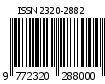
ISSN: 2320-2882 Impact Factor: 7.97 and ISSN APPROVED Journal Starting Year (ESTD) : 2013


ISSN and 7.97 Impact Factor Details
ISSN: 2320-2882 Impact Factor: 7.97 and ISSN APPROVED Journal Starting Year (ESTD) : 2013
DOI Details
CONFERENCE
CONFERENCE MANAGMENT & PUBLICATION CONFERENCE PROPOSAL
RECENT CONFERENCE

CONFERENCE PROPOSAL CONFERENCE PROCEEDINGS
CONFERENCE PROPOSAL CONFERENCE PROCEEDINGS
For Reviewer /Referral (RMS) Earn 500 per paper
Important Links
NEWS & Conference
Digital Library
IJCRT RMS | Earn 500 Per Paper.

Open Access


LICENSE
Indexing Partner
Scholarly open access journals, Peer-reviewed, and Refereed Journals, Impact factor 7.97 (Calculate by google scholar and Semantic Scholar | AI-Powered Research Tool) , Multidisciplinary, Monthly, Indexing in all major database & Metadata, Citation Generator, Digital Object Identifier(DOI)